Quick Summary
- Industrial shippers track railcars across multiple carrier portals, spreadsheets, and manual checks, and still miss what’s actually happening on the ground.
- Cedar AI’s ARMS™ platform puts every car in your fleet on one interactive map, pulling in carrier ETA feeds, direct Class I railroad API data, and GPS telemetry for the cars that have it installed.
- Railinc reconciliation runs automatically, so fleet records match what railroads actually report.
- The payoff: fewer portal logins, fewer surprise delays, and a team that spots problems before a customer calls asking where their shipment went.
The problem: your fleet is scattered across multiple systems
Ask a rail transportation manager where a specific car is right now. Watch what happens next.
They open one carrier portal. Then another. Then a spreadsheet that someone updates twice a day. Then maybe a call to a broker. By the time they have an answer, it’s already fifteen minutes wrong.
The systems are the problem, not the people running them. Most industrial shippers move freight across multiple Class I and short line partners, and each one hands back its own portal, its own login, its own version of “current.” None of them talk to each other.
What real visibility actually requires
“Track and trace” gets thrown around a lot in rail tech. Most of it just means logging into fewer portals, not seeing more.
Real visibility means four things working together:
- Live location data pulled directly from carrier feeds instead of refreshed on a schedule.
- GPS telemetry for cars that need tighter tracking than AEI reads alone provide.
- Direct Class I API integrations, so ETAs come from the railroad, not a third-party estimate.
- Automated Railinc reconciliation, so records match what railroads actually report.
How ARMS puts it on one map
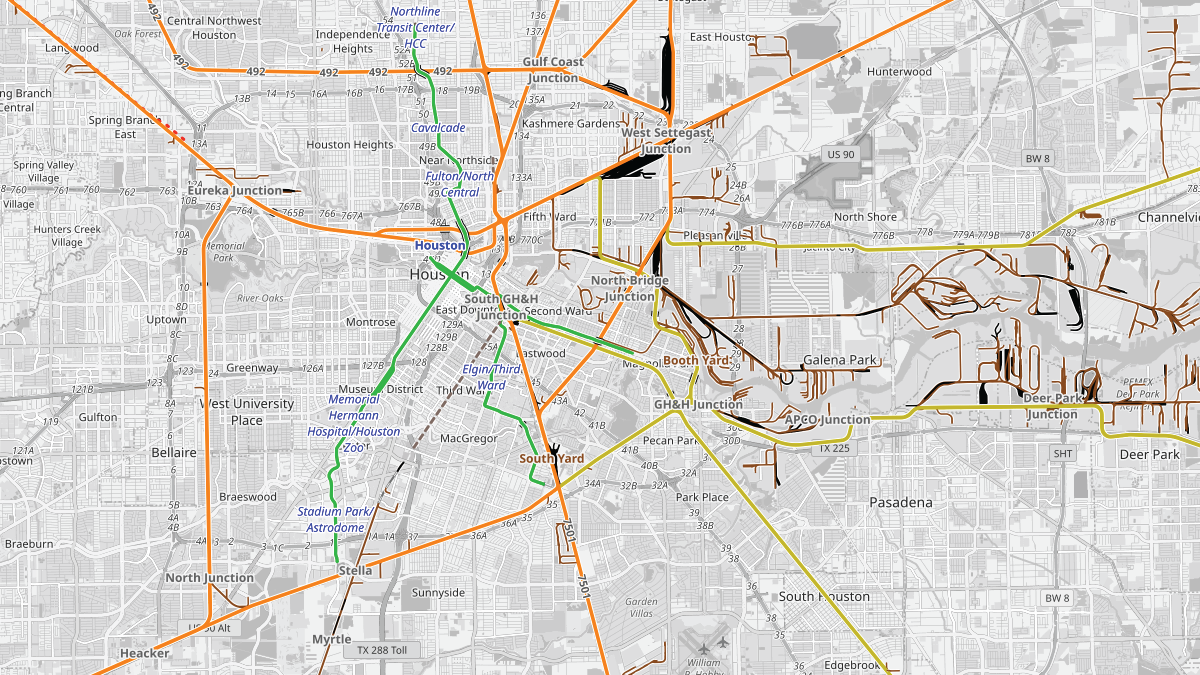
Cedar AI’s ARMS platform connects all of it. Every car in your private or leased fleet shows up on one interactive map, with real-time location, carrier ETA feeds, and direct Class I railroad API integrations running underneath it. Cars equipped with GPS units get that added layer of precision. Railinc reconciliation happens automatically in the background.
Your team stops logging into multiple carrier portals to build one picture. One map shows every car, live.
Why this matters beyond the map
A map by itself doesn’t save anyone money. What it changes is timing.
When your team can see a car dwelling too long at a junction, or an ETA sliding before it becomes a missed delivery, they know before the plant calls asking where its raw material is. They catch the problem while there’s still time to act, instead of explaining after the fact why a shipment showed up three days late.
Shippers running rail spend across disconnected portals are, in effect, paying twice: once for the freight itself, and once more in the labor it takes to find it. Fleet visibility that lives in one place removes that second cost.
One agricultural shipper running rail across three facilities described it this way before consolidating onto one platform: “We were spending the better part of every morning catching up on what shipped the night before.” That’s the cost of fragmented visibility, whether it’s carrier portals or facility systems that don’t talk to each other. The fix is the same either way: one place where the data is already right, instead of a morning spent making it right.
One platform. Every car accounted for.
ARMS gives industrial shippers full visibility into their fleet, inbound and outbound, loaded and empty, without the portal-hopping. It’s one part of a platform built to connect fleet visibility, freight audit, and cost accruals from the moment a shipment is created.
If your team is still piecing together fleet status from multiple logins, that’s worth a conversation.
Curious what full visibility actually looks like for your fleet? See the ARMS platform for Industrial Shippers